
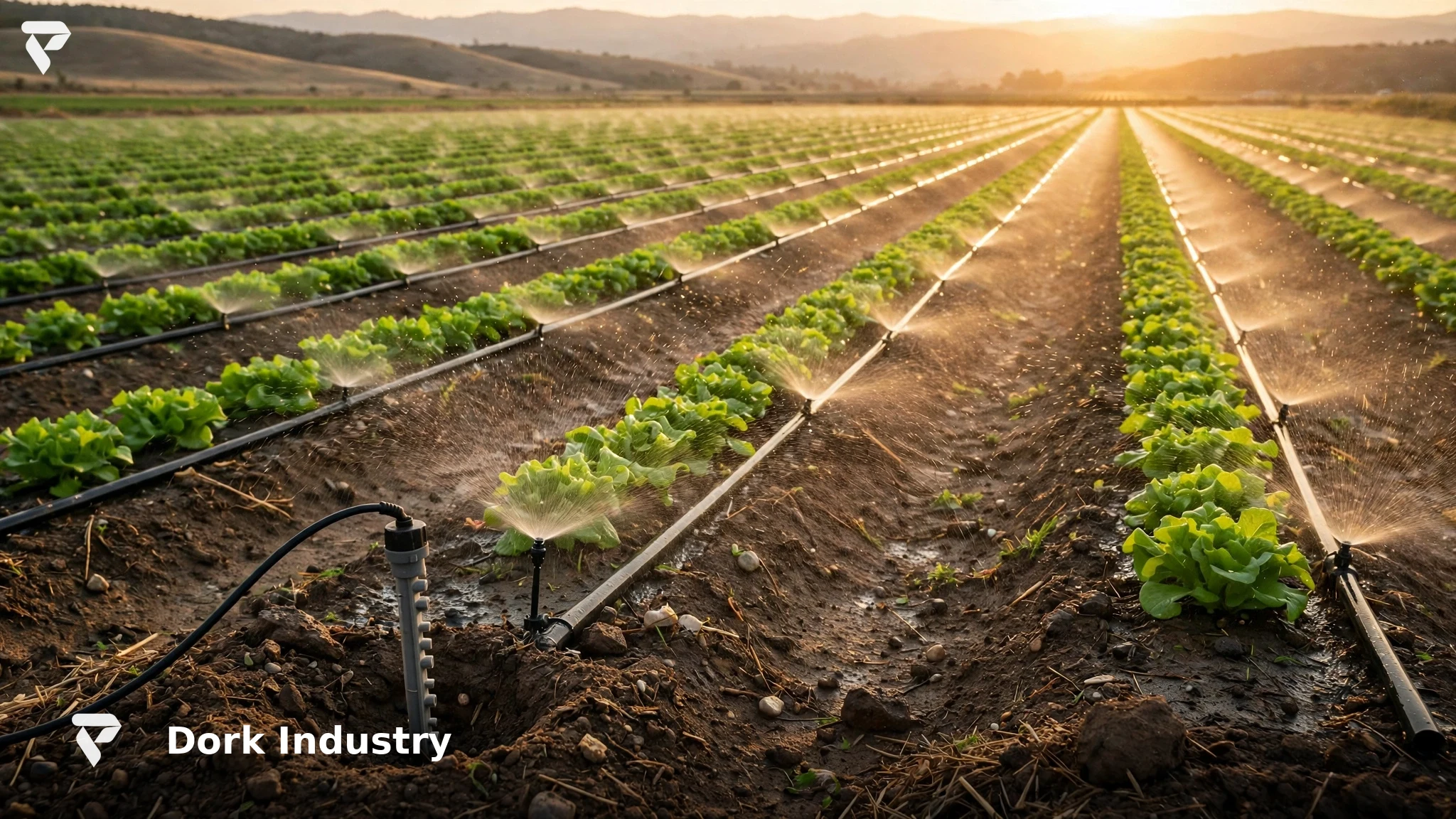
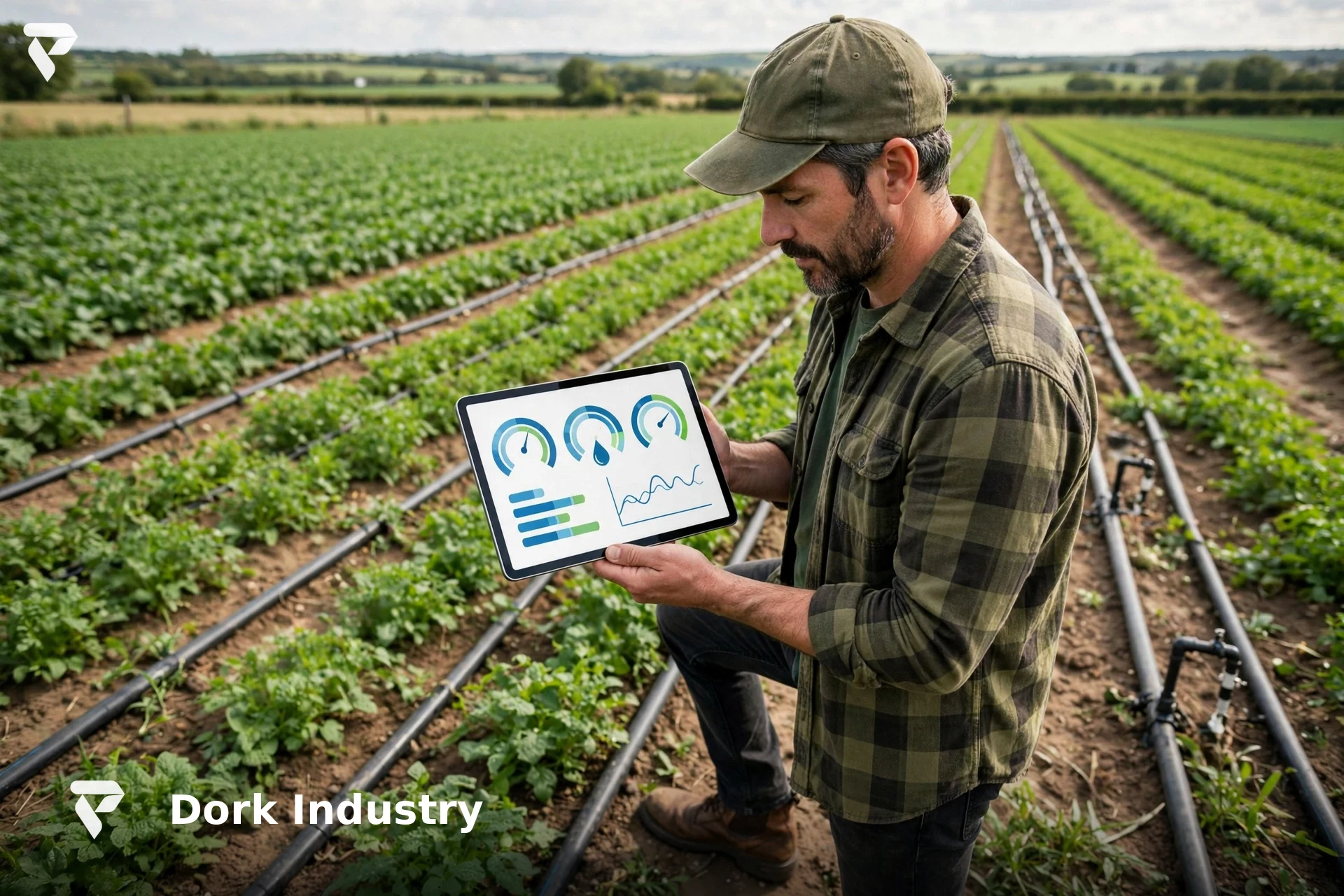
IoT development for farms is rarely about gadgets — it is about whether a farmer can water every zone correctly without standing in the field. Yes: IoT development can automate irrigation, fertigation and crop monitoring across a farm, provided sensor data drives valve and dosing decisions inside guardrails the farmer sets — and the farmer keeps manual override at all times. A farm that grows vegetables on 10 acres does not have a water shortage problem most days. It has an information problem: nobody knows which patch is dry, which is drowning, and how much fertilizer actually reached the roots this week.
This article examines what IoT development must actually deliver for irrigation and fertigation: where farms silently lose water and yield, why manual scheduling fails, what data farms already generate, how a control loop should work, what it must never do on its own, how much it costs, and how to test the idea on one field for 30 days before committing to a full installation.
Where do farms actually lose water, yield and money?
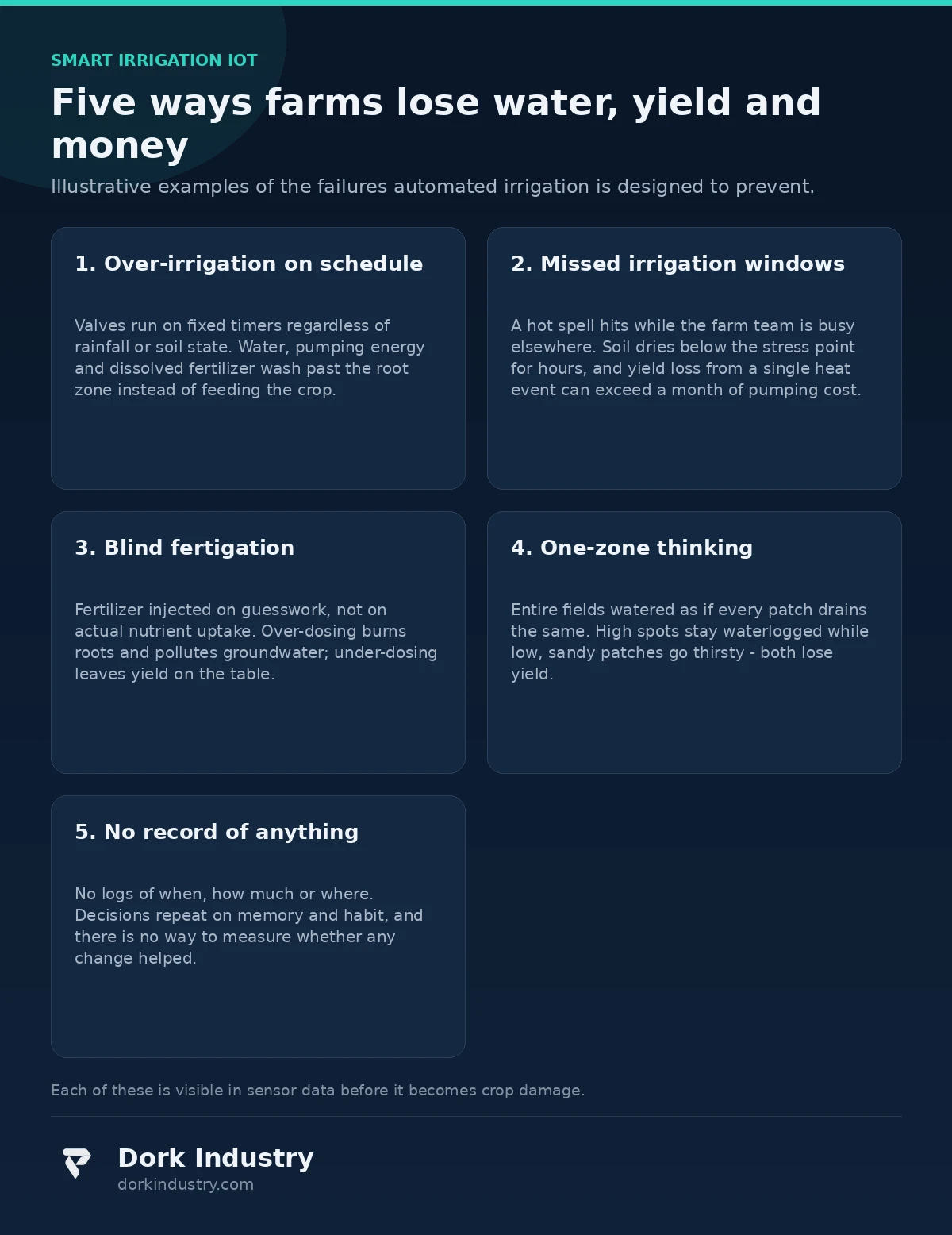
Before discussing technology, it is worth naming the specific leaks. In irrigated farming, losses do not arrive as invoices. They show up as higher pumping bills, fertilizer that washed past the root zone, uneven crop stands, and a harvest that never matched the season’s potential — all blamed on weather or seed quality.
Why does fixed-timer irrigation waste so much water?
Valves run on fixed timers regardless of rainfall, humidity, or actual soil state. After a night of rain, the timer still fires at dawn. According to the FAO’s irrigation scheduling guidance (fao.org), irrigation should be applied when allowable soil water depletion is reached — not on a calendar. Every timer-triggered cycle that the soil did not need wastes water, pumping energy, and the fertilizer dissolved in that water.
Why do hot spells still catch farms unprepared?
A heatwave hits while the farm team is harvesting, repairing equipment, or simply away. Soil moisture drops below the crop’s stress point for hours or a full day. Yield damage from a single missed stress window can exceed a month of pumping cost, and the farmer learns about it only when leaves start wilting — after the damage is done.
Why is fertigation mostly guesswork?
Fertilizer is injected on habit — a fixed dose per irrigation cycle — not on measured nutrient uptake. Over-dosing burns roots and leaches into groundwater. Under-dosing leaves yield on the table. Worse, nobody logs the actual injected quantities, so there is no record to learn from next season.
Why does one field get watered as if it were one patch?
Sandy patches drain in hours; low-lying clay spots stay wet for days. A single schedule for the whole field over-waters one end and starves the other. Farms that added zones by intuition rather than soil data consistently lose yield on both ends.
Why can no one prove what worked last season?
No logs of when each zone was watered, how much was applied, or what was injected. Decisions repeat on memory and habit. When a consultant or input supplier asks for data, there is nothing to show — and no way to measure whether any change actually helped.
What must IoT development deliver on a farm?
A generic dashboard with colorful gauges is not the answer. An IoT system that earns its cost needs to cover five operational areas — and every one of them must leave the farmer in control.
What should the farmer see every morning?
- Soil moisture per zone, at two depths, against each zone’s target band
- Yesterday’s water applied per zone vs the planned amount
- Which valves opened, when, and for how long — with an event log
- Rain forecast and the resulting schedule adjustments for today
- Flow-meter readings confirming that what was commanded actually flowed
- Alerts ranked by urgency, with a one-tap manual override for any zone
How do sensors become irrigation decisions?
Soil-moisture probes, weather stations and flow meters publish readings every few minutes over lightweight protocols designed for unreliable networks — MQTT is the common choice (mqtt.org documents the publish-subscribe model that lets sensors report even on flaky rural links). A local controller on the farm — not a distant cloud server — compares moisture against the target band, checks rain probability and water availability, then decides zone by zone: open, hold, or skip. The logic is deliberately simple: threshold plus guardrails beats clever models that no one on the farm can audit.
How does fertigation get automated safely?
- Fertilizer dosing is tied to actual irrigation events, not a separate timer
- Dosing pumps are interlocked with flow confirmation — no flow, no injection
- Concentration limits per event prevent accidental overdosing
- Every injection is logged: timestamp, zone, volume, product
- pH and EC sensors verify the mixed solution before it reaches the field
What runs when the network dies?
This is the question that separates real farm IoT from gadget demos. The control loop must run on a local gateway with the last known schedule stored on-device. If connectivity drops for a day, zones keep watering on the farmer’s fallback schedule. Sensors buffer readings locally and upload when the link returns. A system that stops working when the internet does is a liability on a farm, not an upgrade.
How does crop monitoring fit in?
The same platform that runs irrigation can ingest satellite or drone imagery (NDVI trends), canopy temperature, and pest-scouting notes — turning the irrigation log into a full field diary. Crop monitoring does not need to be automated on day one; the point is that the data plumbing is already there when the farmer wants it.
What data does your farm already have — and what is it missing?
Most farms already generate the raw material: pump runtime guesses, fertilizer purchase records, harvest weights, the farmer’s own knowledge of which corner of the field always dries first. What is missing is measurement. The data is not timestamped, not per-zone, and not connected to decisions.
An IoT system does not create new work for farm hands — and that principle should guide any IoT development for agriculture. It captures the irrigation work they already do — opening valves, mixing fertilizer, noting the weather — in a form the farmer can actually act on. The most common implementation failure is designing a dashboard for the owner while making the physical hardware painful to maintain: sensors nobody calibrates, valves nobody can find, cables cut by the first tractor pass. If the field installation is fragile, the data will be worthless within a season.
What does the math look like? An illustrative example
Consider a 10-acre vegetable farm irrigating 120 days a year. Assumptions (illustrative, not benchmarks): the farm currently irrigates on a fixed 2-hour timer per zone per day, pumps 40,000 litres per cycle day, pays roughly ₹8 per unit of electricity, and spends ₹60,000 per season on fertigation inputs.
If sensor-triggered scheduling cuts unnecessary cycles by 25% — skipping post-rain days and stopping at the target moisture band — the farm saves about 1.2 million litres of water per season and roughly ₹20,000 in pumping cost alone. Fertilizer savings are harder to measure but often larger: reducing leaching from over-irrigation means a meaningful share of that ₹60,000 actually feeds the crop instead of washing past the roots. And the avoided losses matter most: one saved crop-stress event during a heatwave can be worth more than all the water savings combined.
These are illustrative figures with stated assumptions, not industry statistics. But they show where the value concentrates: not in the water bill, but in fertilizer efficiency and in the yield that would otherwise have been lost to a missed irrigation window.
Should you build or buy? An honest breakdown
Not every farm needs custom IoT development. The honest options, in order of investment:
| Approach | Best for | Relative investment | Where it breaks |
|---|---|---|---|
| Timer + manual valves | Small uniform plots, reliable labour | Minimal | No measurement, no records, misses stress events |
| Off-the-shelf smart controller | Standard drip or sprinkler layouts | Low hardware cost | Generic schedules; cannot model unusual zones or fertigation interlocks |
| Agri-IoT platform subscription | Farms wanting sensors + dashboards fast | Medium, recurring | Vendor-locked data, cloud-dependent, limited custom logic |
| Custom IoT development | Multi-zone farms, fertigation, mixed crops, integration with existing pumps | Highest | Overkill for a single uniform plot with standard layout |
At Dork Industry, we regularly advise farms against custom builds when an off-the-shelf controller fits. A credible technology partner should be willing to tell you that a ₹15,000 smart controller covers your plot. If every consultation ends with a quotation for a custom system, get a second opinion.
What should automated irrigation never do?
Technology boundaries in IoT development matter as much as features — especially on a farm, where a wrong decision can destroy a season in hours.
- Never override a farmer’s manual command. If the farmer closes a valve, the system must not reopen it on schedule. Automation proposes and executes routine work; the farmer’s direct command always wins.
- Never irrigate during rain or when the tank is low. These guardrails are non-negotiable defaults, not settings a busy installer can leave disabled.
- Never change fertigation concentration autonomously. The system may adjust timing within farmer-approved bands, but dose strength changes require explicit human approval.
- Never depend on the cloud to keep crops alive. If connectivity dies, the last good schedule runs locally. Any system that needs the internet to water the field is unacceptable.
- Never hide the reasoning. Every automated action must answer, in plain language, why it happened: “Zone 3 watered 45 minutes because moisture fell below 22% at 30cm depth.” Black-box irrigation destroys trust.
How do you test it in 30 days before full investment?
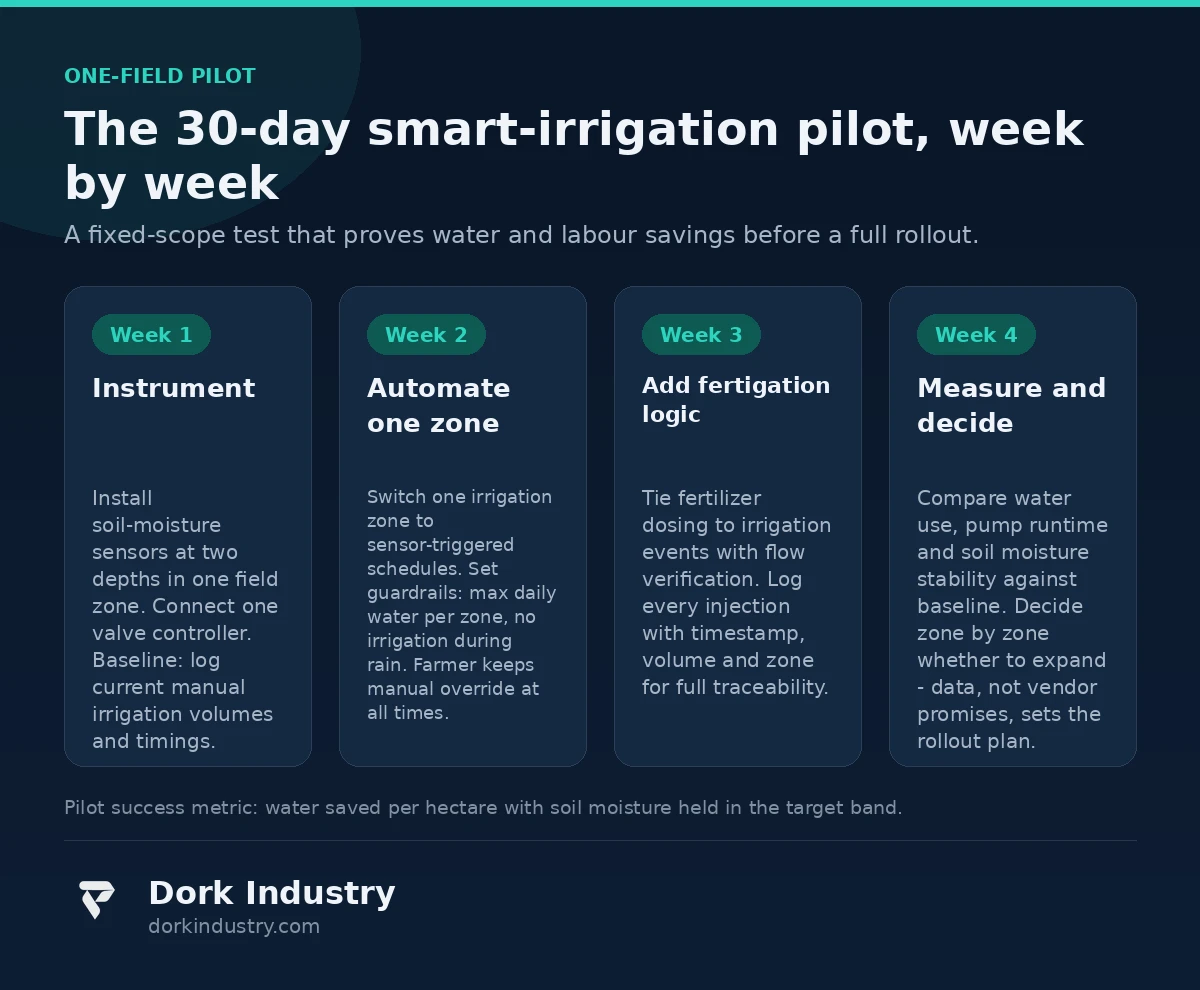
The lowest-risk path is a one-field pilot with a fixed scope and measurable outcomes:
- One field, one crop, 2–4 zones instrumented
- Soil-moisture sensors at two depths, one valve controller per zone, flow meter at the pump
- Run for 30 days through at least one dry spell
- Measure: water applied per hectare vs the same period last season, pump runtime, moisture held within the target band, labour hours spent on irrigation
If water use and labour do not measurably improve in the pilot, a bigger IoT development investment will not fix it either. The pilot validates the field reality — soil behaviour, hardware durability, farmer adoption — not just the software. This is the assessment Dork Industry runs before quoting any farm project: instrument first, measure honestly, then decide what earns its cost.
What actually drives the cost of farm IoT development?
Farm IoT pricing varies widely because scope does. The real cost drivers are:
- Zones and terrain: flat uniform fields vs multi-crop, multi-soil farms with dozens of valves
- Existing infrastructure: new drip installation vs retrofitting manual pumps, valves and tanks — retrofit dominates cost in older farms
- Connectivity: farm Wi-Fi vs LoRa gateways vs cellular for remote fields
- Sensor density: one probe per zone vs depth-paired probes plus weather stations and EC/pH
- Fertigation scope: water-only scheduling vs full dosing control with safety interlocks
- Offline resilience: local gateway with buffered control logic vs a simple cloud dashboard
Anyone quoting a fixed price without asking about zones, existing valves, and connectivity is guessing. Similar sensor-driven thinking applies to other farm operations too — see how sensor data catches problems before they become losses in a dairy plant.
Frequently asked questions
Do I need custom IoT development, or is a smart controller enough?
For a single uniform plot with standard drip layout, a quality smart controller with soil-moisture feedback is usually enough and far cheaper. Custom development earns its cost with multiple zones, fertigation, mixed crops, or integration with existing pumps and tanks.
What happens to my crops if the internet goes down?
Nothing bad, if the system is designed correctly. The control loop runs on a local gateway with the last approved schedule stored on-device, so irrigation continues during an outage and sensor data syncs when the link returns. Ask any vendor this question before signing.
Can automation really reduce fertilizer cost?
Yes — mainly by stopping over-irrigation that leaches fertilizer past the root zone, and by logging every injection so dosing is based on records instead of habit. The savings come from precision and measurement, not from using less fertilizer where the crop needs it.
How long does a farm IoT pilot take to install?
A one-field pilot — sensors, valve controllers, a local gateway — can be installed in a few days and run for 30 days to gather meaningful comparison data. A full multi-zone rollout typically follows over 6–10 weeks after the pilot validates the approach.
Will farm workers actually use the system?
Adoption follows simplicity: if overriding a schedule is one tap, the event log answers every “why did it water?”, and the hardware survives the field, workers use it. If the system needs an app tutorial to stop a valve, it will be bypassed within a week.
About Dork Industry
Dork Industry (dorkindustry.com) is a custom software development company building mobile apps, AI automation, and IoT systems for businesses across India. Our team designs sensor-driven systems for farms, dairy plants, and industrial facilities — from 30-day pilots to full multi-site rollouts.
The bottom line
The question is not whether a farm needs IoT development. It is whether the farmer can know — zone by zone, in real time — which patch needs water, how much fertilizer reached the roots, and what happened while they were away. If the answer is no, the technology decision is really an operations decision wearing a hardware costume.
Start with one field, instrument it for 30 days, and let measured water and labour numbers — not brochures — decide whether to scale the IoT development further.
Running an irrigated farm and want to know what sensor-driven scheduling would change in your specific operation?
We map your current irrigation, pumping, and fertigation process and show you exactly what IoT would (and would not) fix, before any development is discussed.
Request a one-field smart-irrigation pilot WhatsApp +91 8210792477